
Brooklyn Park Dumpster Street Permit Requirements & Costs
Navigating Brooklyn Park's dumpster street permit requirements is essential for residential areas like Tessman and Shingle Creek, where cul-de-sac layouts dominate. Noble Parkway Dumpsters simplifies the process, handling permit logistics so you can focus on your project. With local expertise and knowledge of Brooklyn Park's low flood risk and moderate climate, we ensure compliance with all city regulations.
The Headache of Street Placement and Permits
I remember a job back in the Founders neighborhood where a homeowner tried to skip the permit process for a street placement. We arrived with a 30 yard dumpster, only to find the city inspector already circling the block. Because those larger containers often require street placement due to driveway size constraints, you'll run into trouble if you haven't cleared it with the city first. We've seen crews get fined or even forced to move equipment mid-job because of missed paperwork. Whether you're working near Shingle Creek or in the Tessman area, we handle the heavy lifting so you don't deal with the red tape. We'll help you navigate guides on proper placement to keep your project on track. Don't risk a fine when you can call Noble Parkway Dumpsters to get it right the first time.
Pre-Delivery Site Checklist
-
[object Object]
-
[object Object]
-
[object Object]
Brooklyn Park Street Permit Requirements for Dumpster Placement
- Obtain permit through city public works department
- Provide site-specific loading zone details
- Demonstrate compliance with street width requirements
Key Takeaway
Brooklyn Park street permits protect public safety and infrastructure during temporary dumpster placement near residential zones.
Dumpster Street Permit Requirements & Costs in Brooklyn Park, MN
Obtaining a dumpster street permit in Brooklyn Park involves compliance with city regulations to ensure safety and minimize disruption in residential neighborhoods such as Founders, Tessman, and Shingle Creek. Permits are mandatory for placing dumpsters on public streets, especially near cul-de-sac layouts common in newer home expansions. Fees typically range from $50 to $150 per week depending on dumpster size and location. Weather conditions including freezing days and occasional high temperatures influence scheduling and placement. The low flood zone risk reduces permit complications but requires adherence to placement rules near landmarks like Historic Eidem Farm. Proper permit acquisition prevents fines and service interruptions.
| Specification | 10-Yard Dumpster | 20-Yard Dumpster | 30-Yard Dumpster | 40-Yard Dumpster |
|---|---|---|---|---|
| Permit Type | Required For | Fee Range | Typical Processing Time | Notes |
| Standard Street Permit | Dumpsters placed on public streets in residential areas | $50-$100 per week | 3-5 business days | Mandatory in Founders, Tessman, Shingle Creek neighborhoods |
| Extended Duration Permit | Dumpsters remaining on site over 4 weeks | $100-$150 per week | 5-7 business days | Requires additional signage and inspection |
| Cul-de-sac Placement Permit | Dumpsters in cul-de-sac areas with limited street access | $75-$125 per week | 4-6 business days | Additional space management rules apply |
| Commercial Dumpster Permit | Business dumpster placement on street | $80-$130 per week | 3-5 business days | Noble Parkway Dumpsters provides guidance for compliance |
| Temporary Permit | Short-term dumpsters (under 7 days) | $50 flat rate | 1-3 business days | Limited to small projects or events |
| Oversize Dumpster Permit | Dumpsters exceeding 20 cubic yards | $120-$180 per week | 5-7 business days | Requires street clearance verification |
| Permit Renewal Fee | Extension beyond original permit period | $40-$70 per week | 1-2 business days | Submit renewal 72 hours before expiration |
| Violation Fine | No permit or incorrect placement | $200-$500 | Immediate | Enforced by city code enforcement |
| Weather-Related Delay | Permit processing delayed by extreme weather | No fee change | Varies | Applicable during freeze or heavy precipitation days |
| Permit Transfer Fee | Permit transferred to another party or location | $30-$50 | 2-4 business days | Requires city approval |
| Special Event Permit | Dumpsters placed for public or cultural events | $100-$200 | 7-10 business days | Includes Historic Eidem Farm vicinity events |
| Environmental Compliance Fee | Additional fee for hazardous waste disposal | $75-$150 | Variable | Ensures adherence to EPA and DEQ regulations |
| Inspection Fee | On-site inspection after permit issuance | $50-$75 | Scheduled | Verifies proper placement and safety measures |
| Permit Cancellation Fee | Canceling permit before start date | $20-$40 | Immediate | Refunds depend on timing of cancellation |
Brooklyn Park Dumpster Street Permit Requirements and Costs
Obtain a street permit from Brooklyn Park city before dumpster placement.
Street Permits in Brooklyn Park Aren’t One-Size-Fits-All
We haul it away, so you don't have to worry—but that starts with knowing exactly where and how a dumpster can legally sit. Javier’s seen too many projects stall because a container blocked a snow route or sat on unpermitted pavement. Our approach blends local knowledge of Brooklyn Park’s civic zones, residential expansions, and seasonal extremes with precise compliance so your job moves forward without fines or delays.
-
Permit Clarity First
We map Brooklyn Park’s street use rules so you avoid delays. Our crew cross-references each neighborhood’s layout—like cul-de-sac access in Founders or church-adjacent zones near St. Vincent de Paul—with current public works guidelines before delivery.Real World ExampleIn Tessman Area, we pre-verify curb cut allowances so your 20-yard dumpster won’t block civic foot traffic during drop-off.
-
Climate-Adapted Placement
Frozen ground and snow removal routes dictate safe dumpster siting from November through March. We adjust placement based on 156 annual sub-32°F days to prevent pavement damage and ensure emergency vehicle access.Real World ExampleDuring a January demo in Founders, we positioned the container on reinforced plywood away from snowplow paths.
-
Right-of-Way Coordination
Street permits often require temporary lane adjustments. Our commercial fleet access lets us work with city engineers to stage containers without disrupting neighbors or violating low-flood-zone drainage rules.Real World ExampleNear St. Vincent de Paul, we timed delivery around Sunday mass and used compact-footprint bins to preserve sidewalk clearance.
-
Legacy Home Sensitivity
Homes built between 1980–2000 in Brooklyn Park often have narrow driveways and aging asphalt. We assess surface integrity beforehand and recommend protective measures to prevent cracking under heavy loads.Real World ExampleIn a Tessman renovation, we used walk-in-loading-door dumpsters to minimize backing maneuvers on brittle pavement.
Every dumpster placement in Brooklyn Park is reviewed against current street use policies, neighborhood access constraints, and weather realities—so you’re never left guessing whether your permit covers what’s actually on the ground.
Common Dumpster Street Permit Mistakes in Brooklyn Park
Street permits get messy fast in Brooklyn Park when the bin lands in the wrong spot, the load’s mixed, or winter weather tightens access. We’ve handled plenty of these setups, and the same mistakes keep causing delays.
Leaving a street dumpster on the curb in Brooklyn Park without checking whether the block needs a permit
The Consequence
The Fix
Assuming a driveway placement follows the same rules as a street placement
The Consequence
The Fix
Underestimating how snow, thaw, and freeze cycles change a street pickup
The Consequence
The Fix
Loading prohibited material into a street dumpster and hoping nobody notices
The Consequence
The Fix
Choosing a dumpster size without thinking about how long the bin will sit on the street
The Consequence
The Fix
Navigating Brooklyn Park's Dumpster Permit Rules
We've handled permits for every Brooklyn Park neighborhood since 2008, and here's what matters most: cul-de-sacs in Founders require extra clearance for our 20-yard dumpsters, while Tessman Area jobs near the CAC need event-day coordination. Winter freeze-thaw cycles mean we stake permits differently November through March - our crew uses rubber mats under high-capacity units to prevent pavement damage. For Shingle Creek homes built in the 90s, we recommend driveway protection over street placement to skip permits entirely.
Placement Feasibility Checklist
-
Verify if your project requires a street permit based on dumpster placement
-
Check Brooklyn Park's zoning map for Tessman Area or Founders neighborhood restrictions
-
Schedule dumpster delivery around CAC event dates to avoid parking conflicts
-
Review flood zone maps for Shingle Creek properties near storm drains
-
Confirm with our team about compact dumpsters for tight cul-de-sacs
Dumpster Street Permit Requirements & Costs in Brooklyn Park
Understand local dumpster permit rules and fees affecting neighborhoods like Shingle Creek and Founders in Brooklyn Park.
What triggers the need for a street permit for dumpster placement in Brooklyn Park?
How does Brooklyn Park regulate dumpster permits in residential areas such as Shingle Creek?
What are common costs associated with obtaining a dumpster street permit in Brooklyn Park?
Are there seasonal considerations for dumpster permits given Brooklyn Park’s climate?
What operational challenges affect dumpster placement near North Hennepin Community College?
Which city department handles dumpster street permits in Brooklyn Park?
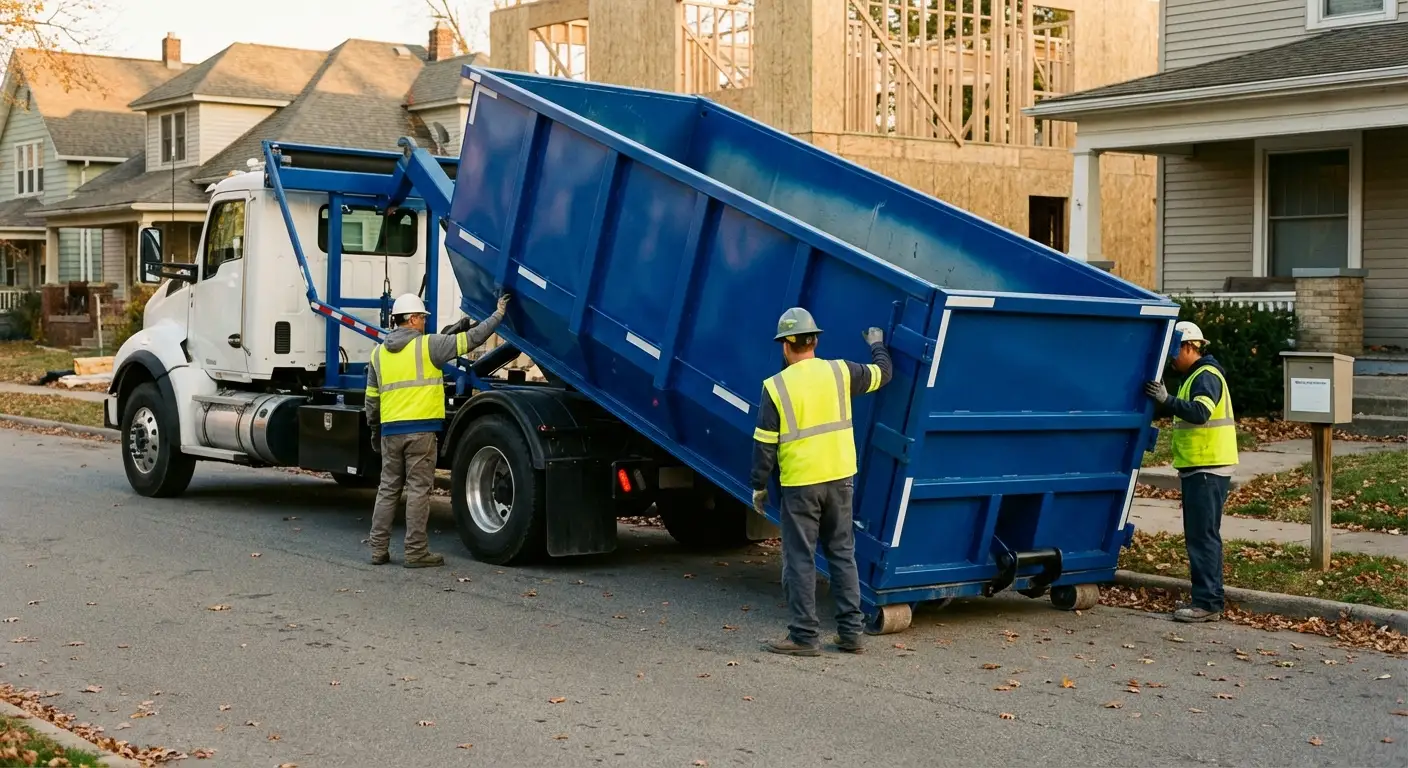
Brooklyn Park Dumpster Permit Rules Explained Clearly
Learn what you need to legally place a dumpster on Brooklyn Park streets. Avoid fines and delays with correct permit steps.
Serving Brooklyn Park with compliant dumpster solutions since day one.